


Key takeaways
- Jira doesn't check for duplicates when someone creates an issue, so finding them natively means searching by keyword with JQL.
- When you find a duplicate, link it to the original with the "duplicates" link type and resolve it as Duplicate, so the history and watchers aren't lost.
- A duplicate isn't a clone: Jira's Clone action copies an issue on purpose, a duplicate is the same problem reported twice by accident.
- Most duplicates come from bug reports written by different people in different words, which is why keyword search catches only some of them.
- Find Duplicates, Reliex's app, lists likely duplicates on the issue page, filtered by project, work type or component.
A tester finds a login timeout on Tuesday and files a bug. On Wednesday a support engineer gets the same complaint from a customer and files another one, with a different title. By Friday two developers have each spent half a day on the same problem. Nobody did anything wrong; Jira just never told them.
That's the core issue: Jira has no built-in duplicate detection when an issue is created. You can find duplicates afterwards with search, and you can handle them cleanly once found. Catching them early takes an app. Here's how to do each.
Does Jira detect duplicate issues?
No, not automatically. When you create an issue, Jira doesn't check whether a similar one already exists. What Jira does have is everything you need once you suspect a duplicate: full-text search, a Duplicate link type, and usually a Duplicate resolution.
How do you find duplicate issues in Jira with search?
Search the summary and description for the words someone would use to describe the same problem.
- Go to the issue search and switch to JQL.
- Search by key words, for example project = APP AND text ~ "login timeout" ORDER BY created DESC. text ~ searches summary, description and comments; use summary ~ to search titles only.
- Narrow it with issuetype = Bug and statusCategory != Done to see open duplicates only.
- Try two or three phrasings ("login timeout", "session expired", "logged out"), because people describe the same bug differently.
- Save the search as a filter if you triage bugs every week.
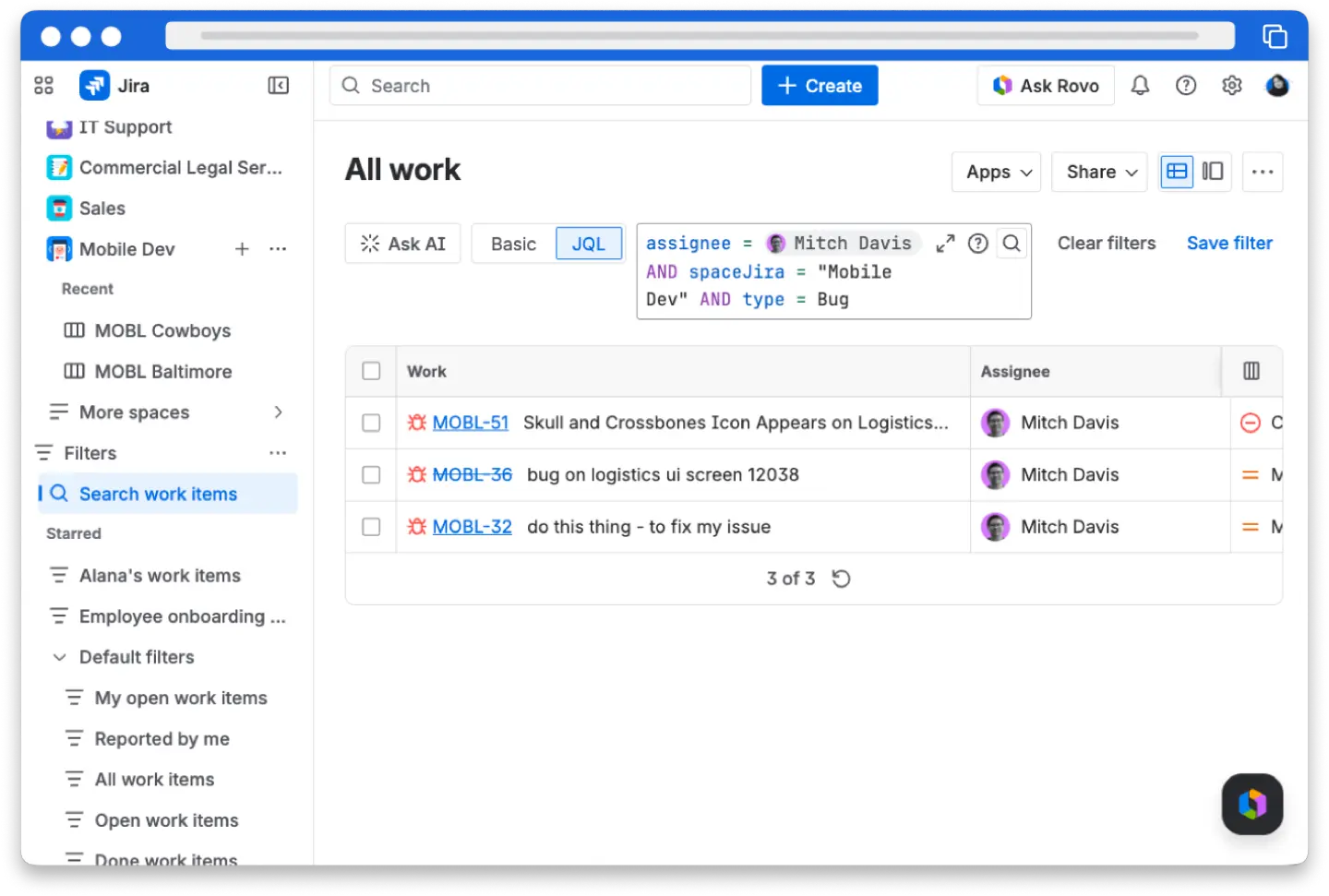
It works, but only if someone thinks to search, and only for the words they think of.
What should you do with a duplicate issue?
Keep one, link the other, then close it, so nothing gets lost.
- Decide which issue stays: usually the older one, or the one with better steps to reproduce.
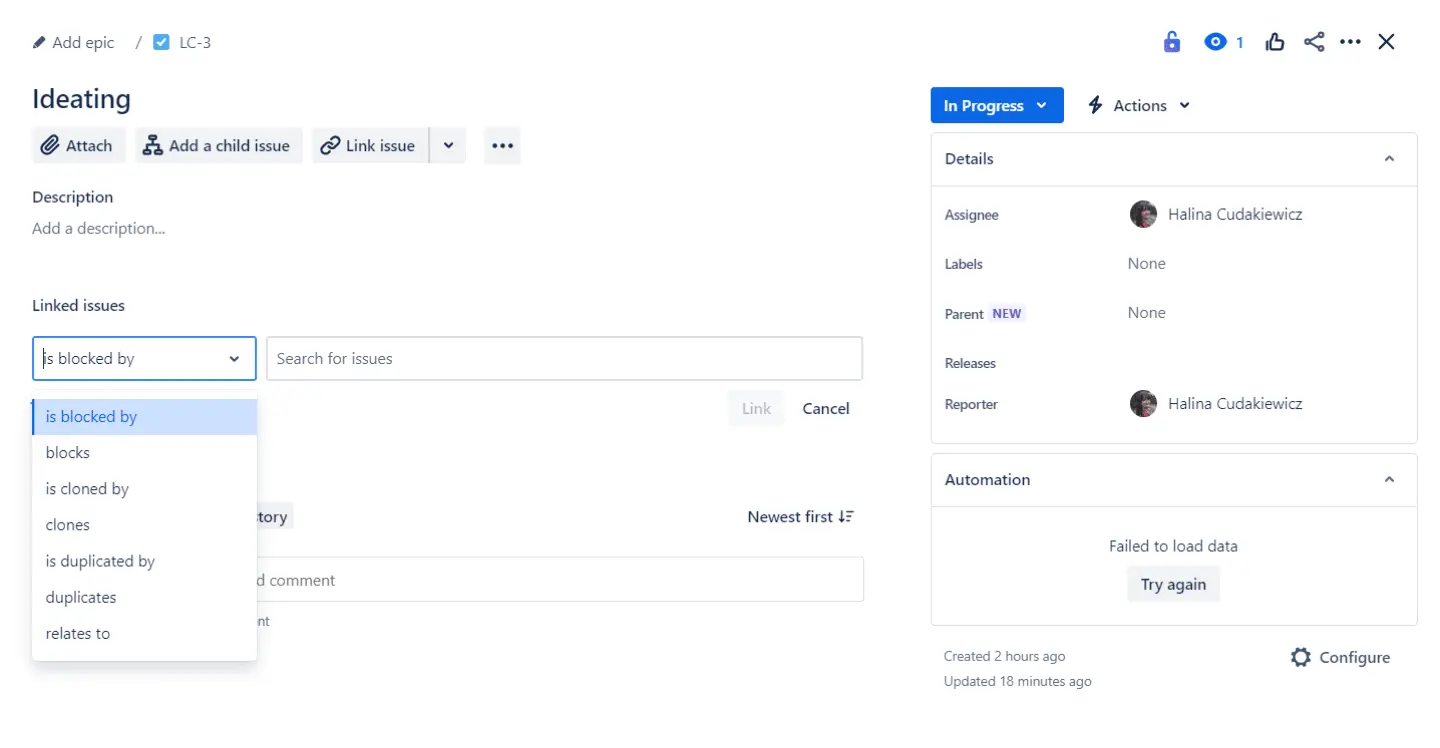
- Open the duplicate, choose Link, pick duplicates, and select the original.
- Copy anything useful that only the duplicate has (a log, a customer name, a screenshot) into a comment on the original.
- Resolve the duplicate as Duplicate (or close it with a comment if your workflow has no such resolution).
The link matters more than it looks. Anyone who opens the closed issue lands on the right one, and reporters can watch the original.
Duplicate vs clone: what's the difference?
A clone is deliberate: Jira's Clone action copies an issue so you can reuse it, for example the same task for another platform, and links the two with "clones". A duplicate is accidental: the same problem reported twice. Clones are fine. Duplicates waste time, because two people work on one problem without knowing it.
How do you catch duplicates before they're created?
Two habits help: agree on how bug titles are written (component, then symptom, for example "Login: session expires after 5 minutes"), and use components so searches can be narrowed. Both reduce duplicates. Neither stops them, because the person filing the issue still has to search first.
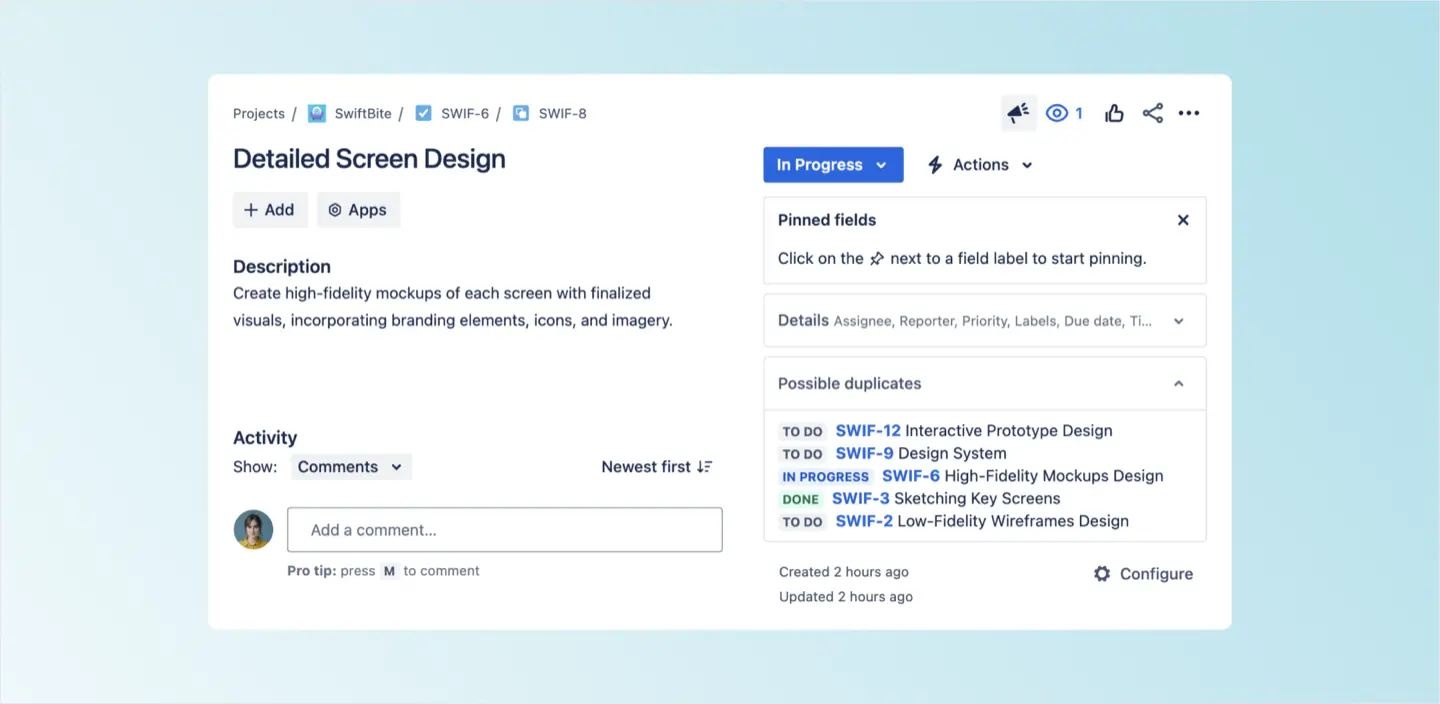
That's the gap Find Duplicates fills. It's a Reliex app for Jira that looks for potential duplicates and related issues for you and lists them in a panel on the issue page.
- It matches on the issue's title and other fields and ignores common words, so "The login page is not working" and "Login page broken" can still match. You can add your own words to ignore.
- You can narrow results to the same project, work type or component, which is how you limit it to bug clones in one product.
- It's available for Jira Cloud and Data Center.
To be honest, if your project gets ten new issues a week, a saved JQL filter is enough. Once several people file bugs into one backlog every day, someone will miss a duplicate, and that's when an app pays for itself.
FAQ
Can Jira automatically detect duplicate issues?
No. Jira doesn't check for duplicates when an issue is created. You can find them later with JQL text search, or add an app such as Find Duplicates, which lists likely duplicates on the issue page.
How do I mark an issue as a duplicate in Jira?
Open the duplicate, add a link with the type "duplicates" pointing to the original, then resolve it as Duplicate. The link keeps the history and sends anyone who opens it to the right issue.
What JQL finds duplicate issues?
Search by keyword: text ~ "login timeout" searches summary, description and comments; summary ~ "login timeout" searches titles only. Add issuetype = Bug AND statusCategory != Done to see open duplicates.
What's the difference between a duplicate and a clone in Jira?
A clone is a deliberate copy made with Jira's Clone action and linked with "clones". A duplicate is the same problem reported twice by accident and linked with "duplicates".
Tired of finding out about duplicates in standup? Find Duplicates has a free trial on the Atlassian Marketplace. Try Find Duplicates


