


Key takeaways
- Jira doesn't publish a calendar feed for Outlook on its own, so showing Jira issues in Outlook takes an app; ActivityTimeline does it with a personal iCal link.
- You subscribe to the link once in Outlook and it keeps updating by itself; you don't need a new link after every change.
- It works the other way too: ActivityTimeline Cloud imports your Outlook calendar, so meetings and time off count against your capacity in Jira.
- Each person's feed shows their own scheduled issues and events, and a team lead can export a whole team's calendar.
- If Microsoft 365 says "We can't add the calendar right now", turn off Shared calendar improvements. You can try ActivityTimeline free for 30 days.
Your meetings live in Outlook and your work lives in Jira, so every morning starts with two tabs and a guess about how much real time is left in the day. On a Tuesday with four hours of calls, the three issues planned for that day don't fit, and nobody notices until Wednesday.
Here's the short answer: Jira can't put its issues into Outlook by itself, but ActivityTimeline can, in both directions. Export puts your scheduled Jira issues into Outlook through an iCal subscription, which takes about two minutes. Import brings your Outlook meetings into ActivityTimeline, where they reduce the hours you have for Jira work. Below are the steps for both, and the one error almost everyone on Microsoft 365 runs into.
Can Jira sync with Outlook on its own?
Not as a calendar. Jira Cloud has a calendar view for a project's work items, sprints and releases, but it lives inside Jira and doesn't give you a feed to subscribe to in Outlook. To see Jira dates in Outlook you need a Marketplace app that publishes an iCal feed. If you only want to check due dates inside Jira, the built-in calendar view is enough, and you can stop reading here.
Why put Jira and Outlook in one calendar?
Because a plan that ignores meetings is wrong by default. When your Jira issues sit next to your calls, you see straight away that Thursday is already full, that the review clashes with a client workshop, or that a three-day task starts on the day you're out of office. Managers get the same picture for the whole team, which matters most when people work across time zones and nobody can just look across the room.
What syncs with which calendar?
The two directions are separate. Export is read-only in Outlook: you change an issue in Jira, not in Outlook. Import is read-only in ActivityTimeline: you change a meeting in Outlook.
How to show Jira tasks in Outlook
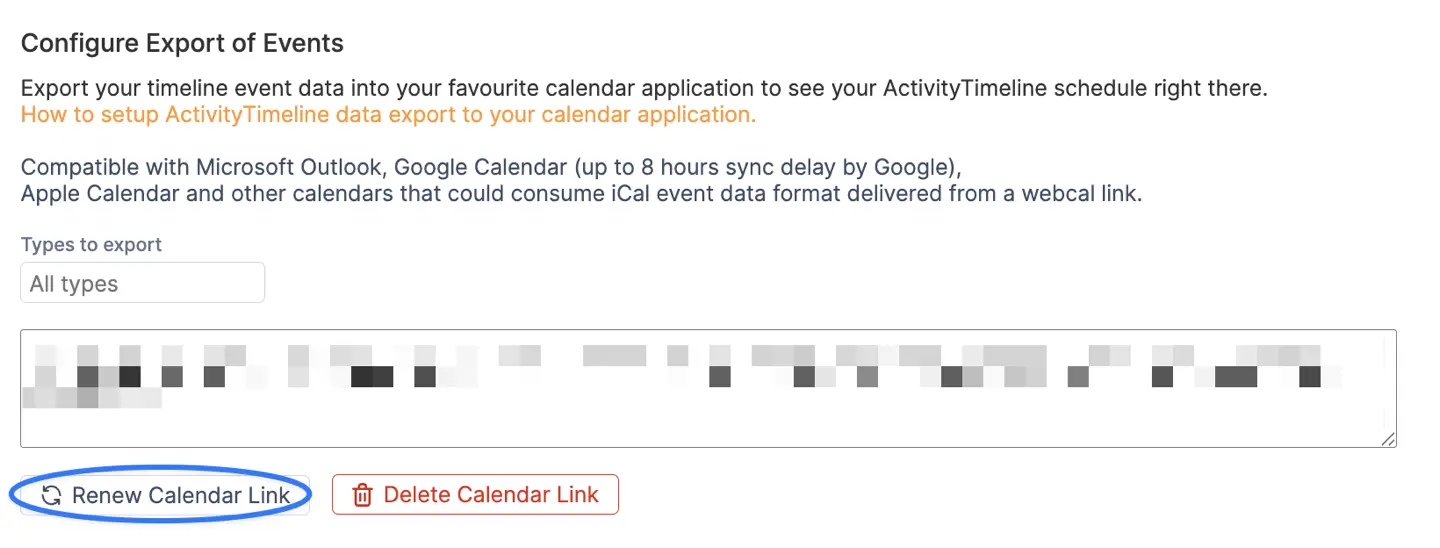
- Copy your calendar link. In Jira, open ActivityTimeline and go to My Account → Calendar Integration. Click Renew Calendar Link and copy the iCal URL.
- Subscribe to it in Outlook. In Outlook on the web or the new Outlook, open the calendar and choose Add calendar → Subscribe from web. In classic Outlook for Windows, choose Add Calendar → From Internet. Paste the URL, name the calendar (for example "Jira work") and confirm.
- Show it when you need it. The calendar appears in Outlook's left panel. Turn it on next to your own calendar, or open it on its own.
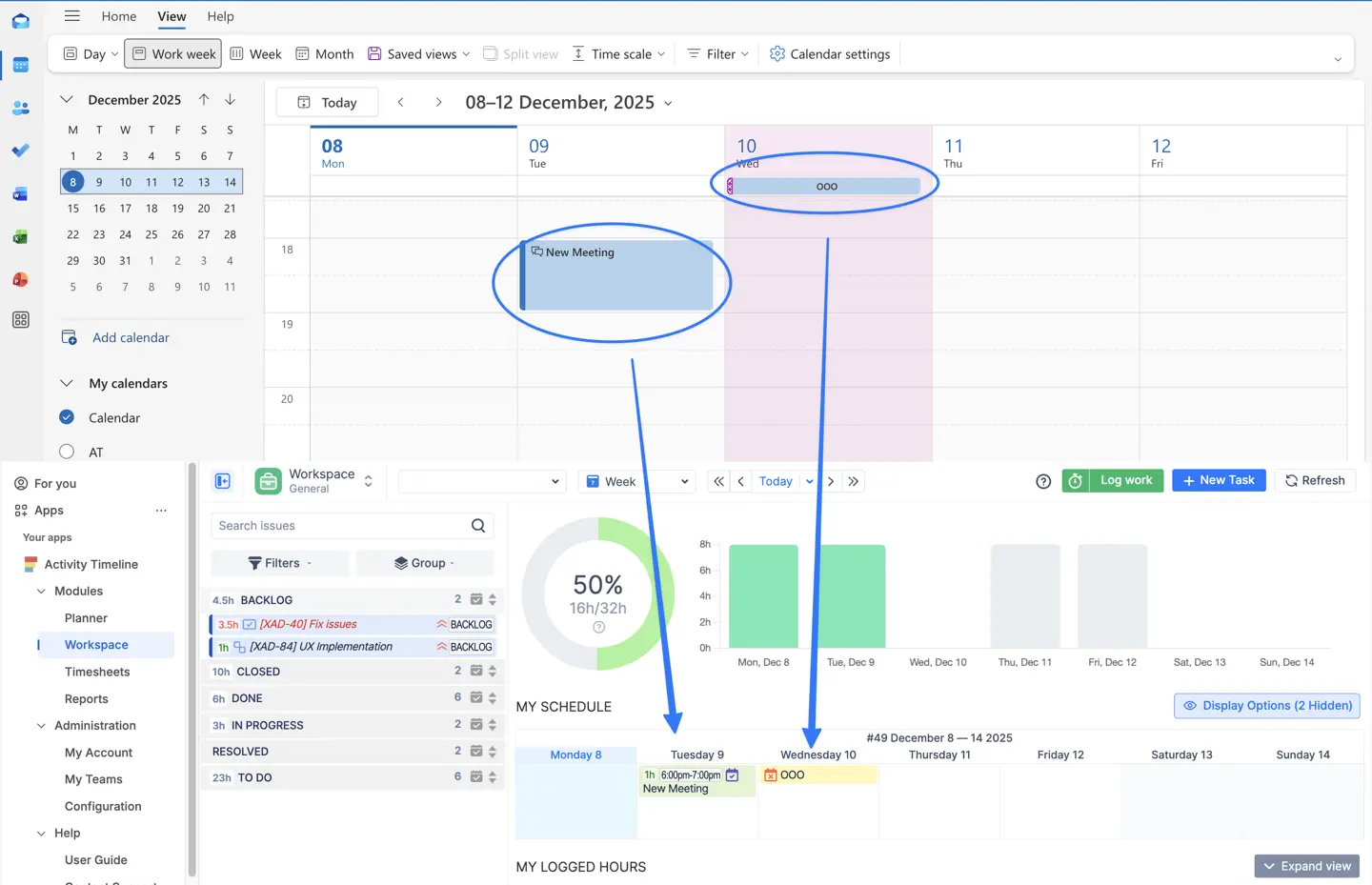
You do this once. When an issue moves on your timeline, Outlook picks up the change the next time it refreshes subscribed calendars. Microsoft controls that schedule, so allow a few hours rather than minutes.
If Outlook says "We can't add the calendar right now". On Microsoft 365 this comes from the Shared calendar improvements setting. Turn it off in your Outlook calendar settings and add the calendar again. If it still fails, check that you copied the whole link.
How to show Outlook meetings in Jira
ActivityTimeline Cloud can import events from Outlook on the web, so your meetings and out-of-office blocks sit next to your Jira issues and reduce the hours you're available.
- In Outlook on the web, go to Settings → Calendar → Shared calendars. Under Publish a calendar, pick your calendar, choose Can view all details and click Publish.
- Copy the ICS link Outlook generates.
- In ActivityTimeline, go to My Account → Calendar Integration and paste it under Configure Import of Events from iCal link.
- Click Continue, choose the time zone to show events in, and click Update.
By default, imported meetings count towards your workload and, once they've happened, as time spent, so they show up in timesheets without anyone logging them. If your team would rather log meetings by hand, an admin can set Configuration → Timesheet Settings → External Calendar Worklog Behavior to Treat none as Worklogs. Then you click a meeting and log it to a Jira issue.
A few things to know. The first sync brings in up to 500 events and the rest follow. After that, sync runs every few hours, and there's a sync icon on the Calendar Integration page if you can't wait. To drop a meeting from your timeline, decline it in Outlook, because events can't be edited inside ActivityTimeline.
Does it work with Google Calendar and Apple Calendar?
Yes, with the same calendar link. In Google Calendar, click + next to Other calendars and choose From URL; the full guide is how to display Jira tasks in Google Calendar. On a Mac, open Apple Calendar, choose File → New Calendar Subscription, paste the link and set Auto-refresh to every hour. On an iPhone, add it as a subscribed calendar in the Calendar accounts section of Settings.
What doesn't sync?
The export is per person: your feed shows only issues and events scheduled on your own timeline. To share a whole team's schedule, a team lead can export it from Configuration → Teams → Export to Calendar and send the link around. Shared Outlook calendars aren't supported, and colleagues without ActivityTimeline won't see your bookings or custom events. Importing Outlook events works with Outlook on the web in ActivityTimeline Cloud.
Two minutes of setup, and the question "do I actually have time for this today?" gets answered by the calendar instead of by guessing.
FAQ
Why does Outlook say "We can't add the calendar right now"?
On Microsoft 365 this usually comes from the Shared calendar improvements setting. Turn it off in your Outlook calendar settings and add the calendar again. If it still fails, check that you copied the full iCal link from ActivityTimeline, including everything after the last slash.
How often does Outlook update Jira tasks?
Outlook refreshes subscribed calendars on its own schedule, which Microsoft controls, so changes in Jira can take a few hours to appear. You don't need to generate a new link after changes; the same subscription keeps updating for as long as it's in your calendar.
Can my whole team see the Jira calendar in Outlook?
Each person subscribes to their own feed. A team lead can export a team calendar from Configuration → Teams → Export to Calendar and share that link with the team. Shared Outlook calendars aren't supported, so everyone adds the subscription in their own Outlook.
Do Outlook meetings count as time spent in Jira?
If you import them, yes by default: past meetings count as time spent and appear in timesheets. Admins can switch to manual logging, where each person picks a Jira issue for a meeting and logs it, which suits teams that bill meetings to specific projects.
Want your Jira work and your Outlook meetings in one week view? ActivityTimeline has a 30-day trial, and your existing Jira data is already there. Start the trial


